
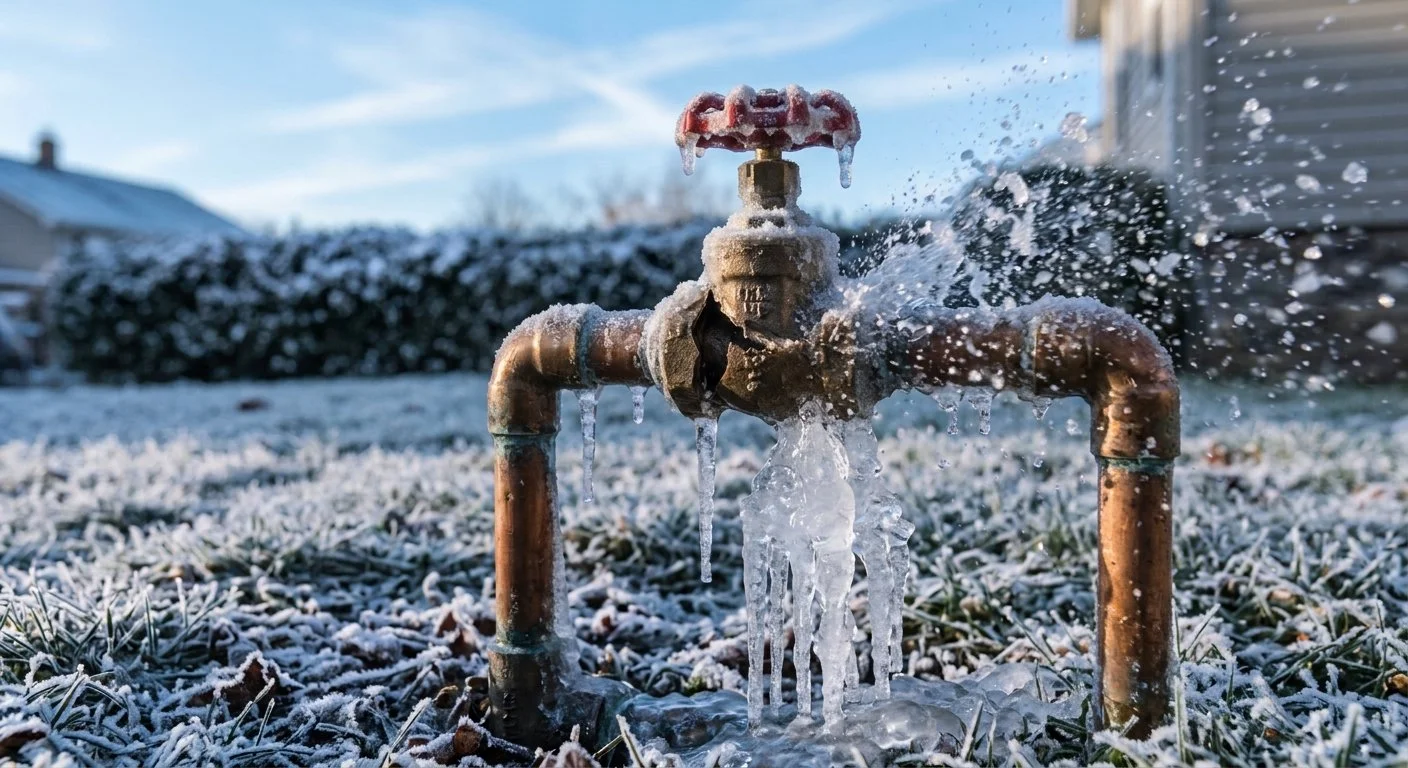
Napa Valley winters are usually mild, but hard freezes still happen—especially in higher elevations such as Angwin, Pope Valley, Mount Veeder, Calistoga and the hills above the valley floor. A single night below freezing can crack pipes, split exposed fittings, damage a jet pump, leaving you without water until repairs can be made. For homeowners, vineyard properties, and anyone on a private well, a little preparation now prevents expensive emergency calls later.
Submersible pumps deep in the well are generally protected below the frost line. The vulnerable parts are everything above ground: pressure systems, control components, exposed piping, wellheads, outdoor faucets, and irrigation lines.
What Needs Protection
Pressure Systems located outdoors, in unheated pump houses, garages, or crawlspaces
Exposed pipes running from the well to the house or tank
Pressure switches, Pressure Transducers, gauges, and small-diameter sensing lines (these freeze first)
Above-ground jet pumps or booster pumps
Outdoor hose bibs, hydrants, and irrigation lines
Well Head plumbing
Backflow Preventors and other valves
Practical Winterization Steps
1. Start with safety
Shut off power to the pump at the breaker before any work. This prevents the pump from running dry while you drain or adjust the system.
2. Inspect and seal enclosures
Walk your pump house, well house, or equipment area. Seal gaps around doors, pipe penetrations, and vents. Cold air entering at floor level is a common cause of freeze-ups. Add weatherstripping and repair any damaged insulation. In mild Napa conditions this often provides enough protection; in higher elevations you may need more.
3. Insulate exposed pipes
Cover all exposed runs with closed-cell foam pipe insulation and tape the seams. Pay special attention to fittings, elbows, and the short sections near the tank and pressure switch. Insulation slows heat loss but does not create heat, so combine it with other measures when hard freezes are expected.
4. Add heat where needed
Self-regulating heat tape (heat cable) on key pipe runs is effective and relatively efficient. Install it according to the manufacturer’s instructions—never overlap it—and protect the circuit with a GFCI. In pump houses, a small thermostat-controlled heater set to keep temperatures above freezing (around 40°F / 4°C) works well. Avoid improvised heat lamps or unguarded space heaters; they are a fire risk.
5. Drain outdoor lines and remove hoses
Disconnect and store garden hoses. Close interior shut-off valves to outdoor faucets (if present) and open the exterior spigots so they can drain. Isolate and drain irrigation lines, wash-down stations, and any seasonal equipment that will not be used. Water left in these lines is one of the most common causes of winter damage.
6. Check the pressure tank
Confirm the air pre-charge is correct for your pressure switch settings. A waterlogged tank causes the pump to cycle more often and is more susceptible to problems in cold weather. If you are unsure how to check or adjust the charge, this is a good time for a professional inspection.
7. For seasonal or unoccupied properties
Fully drain the system. Open the lowest drain points, open faucets, and use low-pressure compressed air to blow residual water from lines. For residual protection in the pump housing or short sections, some owners use food-grade propylene glycol (RV antifreeze). Never use automotive antifreeze—it is toxic and can contaminate your water supply. Leave drain plugs open or loosely installed so condensation cannot collect and freeze.
Local Napa Valley Considerations
Elevation makes a big difference. Properties on the valley floor may only need insulation and drainage, while those in Angwin, Pope Valley, or similar areas should plan for harder freezes and longer cold periods. Vineyard frost-protection systems and large irrigation setups can add complexity—make sure related pumps, valves, and lines are addressed.
Act before the first expected freeze. Waiting until a cold snap is forecast often means limited availability for service calls and materials.
Quick Checklist
Power off at the breaker before work
Seal gaps in pump/well houses
Insulate all exposed pipes
Install self-regulating heat tape or a controlled heat source if needed
Disconnect and store hoses; drain outdoor faucets and irrigation lines
Verify pressure tank air charge
Plan for power outages if using electric heat
Schedule a professional check for complex or higher-elevation systems
When to Call Oakville Pump Service
We have served Napa Valley homeowners, vineyard managers, and communities for more than 45 years with well pumps, pressure systems, storage tanks, and water treatment. If you are not comfortable working on the electrical or pressurized parts of your system, need heat tape installed correctly, want a pre-winter inspection, or have a complex setup (including frost-protection or large irrigation systems), our team can handle it safely and efficiently.
A short winterization visit is far less expensive than replacing a cracked tank or repairing burst lines after a freeze.
Ready to protect your system? Contact Oakville Pump Service to schedule a winterization check or service. We work throughout Napa County—including Angwin, Pope Valley, Calistoga, St. Helena, Yountville, and the greater Napa area.